
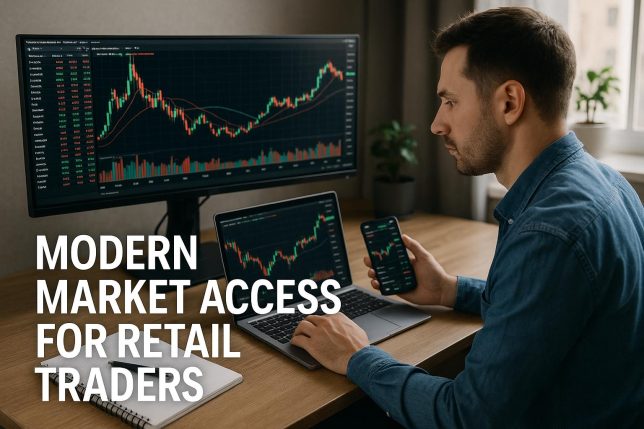
Introduction to Modern Market Access
In recent decades, financial markets have undergone a profound transformation, allowing retail traders unprecedented access to participate actively. Technological advancements have significantly leveled the playing field, enabling retail traders to compete and conduct transactions in ways that were traditionally the domain of institutional investors. This article delves into the key developments that have facilitated this transformation.
Online Brokerage Platforms
Online brokerage platforms have revolutionized access to financial markets for retail traders. These platforms have fundamentally changed the landscape by offering tools and resources that allow for seamless trading from virtually anywhere with an internet connection. Platforms like Charles Schwab, TD Ameritrade, and Robinhood exemplify this shift. The crucial features of these platforms include:
Low Fees: By eliminating trading commissions, online brokers have made trading more affordable for retail investors, allowing them to engage in buying and selling without facing prohibitive costs. This reduction in fees aligns with the broader industry trend of decreasing barriers to entry, ultimately benefiting the retail investor.
Research Tools: Empowering investors with comprehensive research tools and analytical resources has been a game-changer. Retail traders now have access to a wealth of information that helps them make informed decisions. These tools include everything from technical analysis indicators to fundamental data, all available at their fingertips.
User-Friendly Interfaces: Modern interfaces are designed to simplify complex trading processes, enabling new investors to participate with minimal learning curves. This design approach enhances investor confidence and encourages broader participation in the markets. As a result, even those with little experience can navigate the intricacies of trading with ease.
Mobile Trading
The ubiquity of smartphones has ushered in a new era for retail trading, with mobile trading apps becoming indispensable tools. These apps bring convenience and flexibility, allowing investors to trade on the go and ensuring they remain connected to the markets at all times. Key features of mobile trading apps include:
Real-Time Data: Mobile apps provide access to live market data and instant updates, keeping traders informed about the ever-evolving market conditions. This real-time access enables traders to react promptly to market events, seizing opportunities as they arise.
Customizable Alerts: Personalized notifications and alerts for price changes or news that may affect investments offer traders unparalleled flexibility in managing their portfolios. These alerts allow traders to monitor specific assets closely and make timely decisions based on their predetermined criteria.
Seamless Transactions: Efficient execution of trades ensures that retail traders can quickly capitalize on market opportunities. The ability to execute trades smoothly via mobile apps eliminates many of the delays that could otherwise hinder trading strategies.
Access to Information and Education
The internet has democratized access to financial information and education, empowering retail traders to enhance their trading strategies. A vast array of resources is available, enabling traders to educate themselves and refine their skills:
Online Courses and Webinars: Numerous educational platforms offer instructional content, covering everything from basic trading principles to advanced strategies. This content equips traders with the knowledge needed to navigate complex markets effectively.
Financial News Websites: Reliable and up-to-date news platforms, such as Bloomberg or Reuters, provide insights into market trends and economic events. Such information is crucial for traders looking to understand broader market dynamics.
Discussion Forums and Social Media: Platforms like Reddit offer communities where traders can exchange ideas and strategies. These discussions provide valuable insights and foster collaboration among investors with varying levels of experience.
Algorithmic Trading and Automation
The realm of algorithmic trading and automation, once dominated by large financial institutions, has now become accessible to retail traders. Leveraging computer algorithms to execute trades based on pre-defined criteria offers several advantages:
Speed and Efficiency: Algorithms have the capability to analyze market conditions and execute trades at a speed unmatched by human traders. This rapid execution ensures that traders can capitalize on fleeting market opportunities.
Consistent Strategies: Automated systems trade based on logic and parameters, minimizing the impact of emotional decision-making during volatile markets. By adhering to predetermined rules, these systems help traders maintain discipline and consistency.
The Role of Regulation
In the modern financial landscape, regulation plays a crucial role in shaping market access. Regulatory bodies are tasked with ensuring a fair and transparent market environment, protecting retail investors from potential malpractices. Regulations also aim to maintain market stability by overseeing brokerage operations, ensuring the security of financial transactions, and safeguarding customer data.
Moreover, regulation imposes certain standards and requirements on brokerages to enhance transparency and accountability. Retail traders benefit from increased protection through measures such as deposit insurance and clear disclosure requirements. As a result, investors can engage in trading activities with greater confidence in the integrity of the system.
Emerging Technologies: Beyond the Basics
Emerging technologies continue to reshape the landscape of market access for retail traders. Technologies such as blockchain, artificial intelligence, and machine learning are making significant strides in the world of finance, influencing how retail traders interact with the markets:
Blockchain and Cryptocurrencies: Blockchain technology has paved the way for cryptocurrencies, offering new investment opportunities for retail traders. Decentralized finance (DeFi) platforms are also gaining popularity, allowing traders to engage in lending, borrowing, and trading activities outside traditional financial structures.
Artificial Intelligence and Machine Learning: AI and machine learning are increasingly being used to enhance trading strategies and algorithms. These technologies enable traders to process vast amounts of data, identify patterns, and optimize their trading approaches for better outcomes.
Conclusion
Modern market access has significantly broadened the horizons for retail traders, offering unprecedented tools and opportunities. The evolution of brokerage platforms, mobile trading, and the democratization of trading information have reshaped how individuals interact with financial markets. However, with these new opportunities comes a need for responsible and informed trading practices. Retail traders must strive to leverage these tools effectively while remaining cognizant of the risks inherent to trading activity.
Ultimately, the advancements in technology and information dissemination continue to drive the democratization of financial markets. As retail traders navigate this evolving landscape, the importance of ongoing education, prudent decision-making, and adaptability cannot be overstated. By embracing these principles, retail traders can harness the full potential of modern market access to achieve their investment goals.
This article was last updated on: May 15, 2026