
The Evolution of Stock and Market Research
In the past, stock and market research was heavily dependent on manual analysis and expert opinions. Investors and analysts scoured printed financial statements, listened to radio broadcasts, or read articles in financial newspapers to gather insights into market trends and individual stock performances. The advent of technology and digital innovations has transformed this landscape considerably, with one significant tool playing a crucial role: stock screeners.
Introduction to Stock Screeners
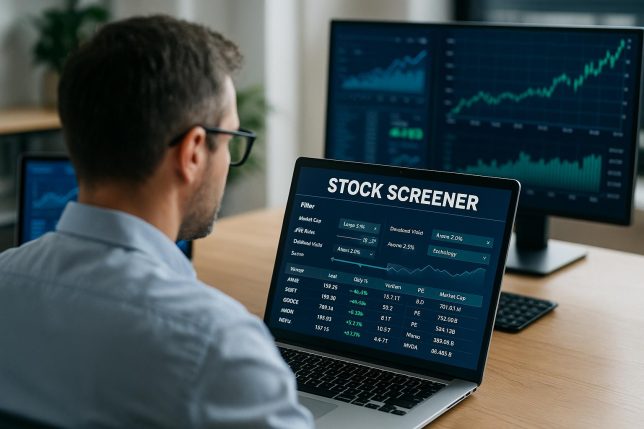
Stock screeners are digital tools that offer investors the ability to filter stocks based on specific criteria. These criteria can include metrics such as price-to-earnings ratio, market capitalization, dividend yield, and many others. By allowing investors to quickly identify stocks that meet their specific requirements, screeners have simplified the research process significantly. Various platforms now offer these screeners, from brokerage firms to financial news websites like MarketWatch.
Advanced Features and Customization
Modern stock screeners offer a range of advanced features and customizable options. Users can set detailed parameters based on technical indicators, such as moving averages and relative strength index (RSI), or by leveraging fundamental analysis criteria. Some screeners integrate real-time data, providing dynamic insights into stock performance as market conditions change. Additionally, many platforms now include backtesting tools to simulate how a potential investment strategy might have performed historically, enabling investors to assess the viability of their approaches before committing capital.
The evolution of advanced features in stock screeners has opened up new possibilities for investors. The ability to customize searches based on a wide range of criteria means that investors can tailor their analyses to specific market conditions or investment strategies. For example, some screeners allow users to incorporate environmental, social, and governance (ESG) criteria, reflecting a growing trend toward socially responsible investing. By integrating ESG factors, investors can align their portfolios with personal values without sacrificing potential returns.
Moreover, the integration of real-time data feeds allows investors to monitor fluctuations in asset prices instantaneously. This capacity for real-time monitoring is crucial in volatile markets, where decisions must be made quickly to capitalize on short-term opportunities or mitigate potential losses. Backtesting capabilities further enhance the functionality of screeners by enabling users to test multiple strategies against historical data, offering a clearer understanding of risk management and potential outcomes.
Accessibility and Democratization of Information
The availability of stock screeners has democratized access to financial information. These tools have empowered individual investors who might not have the resources of institutional investors. By offering intuitive interfaces and a wealth of data at the fingertips of users, these tools simplify complex analyses, allowing more individuals to engage confidently in market activities.
This democratization has not only broadened access to financial markets but has also encouraged a new generation of investors. With the rise of user-friendly platforms, individuals can now educate themselves on investment basics and execute trades, all from their personal devices. The once prohibitive cost and complexity of stock market participation have diminished, breaking down barriers traditionally faced by individual traders.
Impact on Institutional Investors
Institutional investors also benefit from the enhanced capabilities of advanced stock screeners. Their ability to process and analyze large amounts of data quickly enables them to remain competitive in a rapidly changing market. By integrating these tools into their research methods, institutions can develop highly refined portfolios that meet stringent criteria. Furthermore, screeners allow for quicker reactions to market events, facilitating timely investment decisions.
Institutional investors leverage screeners to maintain an edge over competitors through the rapid processing of data and sophisticated modeling techniques. Screeners enable them to apply large-scale quantitative models to identify undervalued assets or exploit market inefficiencies. The ability to swiftly backtest hypotheses and refine algorithms means institutional investors can constantly adapt strategies in response to new information and market dynamics.
Additionally, screeners support effective risk management by allowing institutions to simulate potential scenarios. This capability enables them to optimize portfolios while managing exposure to various risks. Already equipped with significant resources, institutional investors integrate these tools into existing systems, further enhancing their strategic decision-making capabilities.
The Role of Artificial Intelligence and Machine Learning
The integration of artificial intelligence (AI) and machine learning in stock screeners represents a significant development in market research. AI technologies enhance the precision of screeners by identifying patterns and creating predictive models based on vast datasets. These advancements not only improve the accuracy of stock selection but also enable more sophisticated analysis of market trends. As a result, investors can utilize AI-driven insights to inform their strategies and potentially gain a competitive edge.
AI and machine learning introduce a paradigm shift in how financial data is interpreted. By using algorithms to analyze historical data and recognize patterns, these technologies predict future stock movements, offering a substantial advantage over traditional analytic methods. AI-driven models adjust dynamically as new data becomes available, providing ongoing refinement and improved performance predictions.
Furthermore, machine learning’s ability to process unstructured data, such as news articles or social media sentiment, enriches the depth of analysis stock screeners provide. Investors can understand potential market influences quicker and react appropriately. These technologically driven enhancements in stock screening tools not only promise better forecasting but also foster innovative approaches to investment strategies.
Conclusion
Stock screeners have fundamentally altered the landscape of stock and market research. By streamlining the research process, providing detailed analytics tools, and fostering increased accessibility, they have become indispensable in modern finance. As technology continues to evolve, these tools will likely further adapt and expand, offering even more robust features to aid investors in navigating the complexities of the financial markets.
The trajectory of innovation in stock screeners points towards further advancements in data accuracy, user personalization, and the integration of big data analytics. As financial technologies and market environments continue to progress, the role and capabilities of stock screeners will likely expand, solidifying their place as crucial tools for both individual and institutional investors. Continued evolution in this domain will ensure that stock screeners remain pivotal to informed investment decisions, adapting to cater to an increasingly sophisticated and technologically savvy investment community.
This article was last updated on: October 9, 2026